// author archive

admin

admin has written 23 posts for Institute of Paediatric Orthopaedic Disorders (IPOD)

CP Camp at PNR society Bhavnagar

Free camp for children with cerebral palsy will be held at Bhanagar at PNR society on 8th and 9th August
For details contact Nivedita on 09321329888

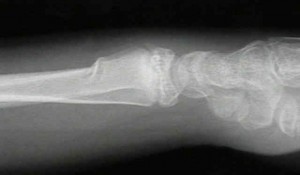
Non Union Lateral condyle Fractures

The questions to ask
The patient factors
Know what the patient has come to you for
1. What are the patient’s complains ?
2. What are the parent’s expectations from the treatment?
3.How are the elbow movements and the function of the child?
The surgeon factors
Know what you are operating for
1.Is it that the xray shows the nonunion and you [...]

IPOD OUTREACH PROGRAMME

IPOD attempts to reach out to children with orthopaedic problems in different parts of India and also in other countries. We are a team of Paediatric Orthopaedic Surgeons and Rehabilitation Specialists and can help NGOs, Government programmes, Private Hospitals, Rehabilitation centres. The programme may be in any form -outreach clinics, assessment camps, surgical camps, lectures, workshop, awareness campaigns etc. If you want to be a part of IPOD’s outreach activities please email to taralnagda@gmail.com. We would like to know your profile and in what ways you want to be associated with IPOD.

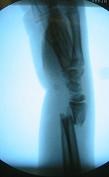
Closed Reduction and Percutaneous Pinning for Supra Condylar fractures of Humerus in Children

Introduction:
Supracondylar fractures are the third most common fractures in children but at the same time the most commonly operated ones. Closed reduction and percutaneous pinning (CRPP) has become the gold standard of treatment of the supracondylar fractures in children preventing complications of deformities and compartment syndrome.
Indications:
1. All grade 3: CRPP is the gold standard of treatment. [...]

Osteogenesis Imperfecta Types

Since 1979, OI has been classified by type according to a scheme developed by David Sillence,
M.D. This system is based on mode of inheritance, clinical picture, and radiologic appearance.
The OI type descriptions provide some information to the clinician and family about a person’s
prognosis, but they do not predict functional outcome. It is also important to note that the
severity of OI ranges greatly; the different types of OI represent somewhat arbitrary cutoffs
along a continuum. As a result, the severity of the disorder may vary significantly among people
who have the same type. The OI classification scheme has continued to evolve as new
information about OI is discovered.

ACCEPTABILITY CRITERIA FOR REDUCTION IN PAEDIATRIC FRACTURES

Children’s fracture have a great capacity to remodel. Yet a few of them result into malunion and deformity. In fractures of upper humerus in a young child large magnitude of angulations can be accepted where as physeal injury of lower femur involving articular carilage needs nothing short of anatomical reduction. The factors affecting the acceptibiloity cliteria are age, Site of fracture, Involvement of growth plate and articular surface, direction of angulation in line with axis of joint movement, ability of joint nearby to compensate for the malunion etc…

Cerebral Palsy: A guide for the post graduates

A brief guide for post graduates on evaluation of children with cerebral palsy

What is Osteogenesis Imperfecta

What is Osteogenesis Imperfecta?
Osteogenesis imperfecta (OI) is a genetic disorder characterized by fragile bones that break easily. It is also known as “brittle bone disease.” A person is born with this disorder and is affected throughout his or her life time.
What causes OI
OI is caused by an error called a mutation on a gene that [...]

Technique of percutaneous temotomy for CTEv in prone position

The article describes a new technique of tendo achilis tenotomy as a part of Ponseti treatment for clubfoot in prone position. It is easy, convenient and needs less number of assistants.

Role of botulinum toxin in cerebral palsy

Botulinum toxin is a medication and a neurotoxic protein produced by the bacterium Clostridium botulinum.

Botulinum toxin type A, is a therapeutic muscle-relaxing agent that reduces the rigidity of muscles or unwanted spasms in a specific muscle. Over the past ten years, the use of botox has shifted from wrinkle reduction to successfully treating muscle spasticity in children with cerebral palsy, making botox and cerebral palsy a hugely successful match.